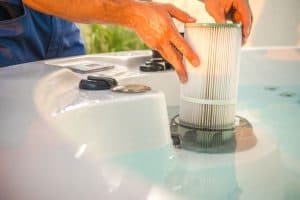
Filters for a Hot Tub: Maintenance Tips for Clean, Clear Water
When it comes to keeping your spa

A failing hot tub pump can produce several warning signs before it stops working completely. Unusual noises, reduced water circulation, intermittent operation, leaks and repeated electrical trips may all indicate that something is wrong.
However, these symptoms do not always mean the pump itself needs replacing. A blocked filter, low water level or trapped air can sometimes produce similar problems.
Recognising the difference is important because replacing a working pump will not resolve an issue elsewhere in the system.
The most useful approach is to observe what has changed, check a few straightforward causes and arrange professional attention when there are signs of mechanical or electrical failure.
Identifying problems early can also help prevent additional damage and reduce the likelihood of losing the use of your hot tub unexpectedly.
Hot tub pumps move water through the plumbing and filtration systems. Depending on the design, they may also provide the water pressure needed to operate the massage jets.
Different hot tubs use different pump arrangements.
Some have a dedicated circulation pump responsible for moving water through the filtration and heating systems, alongside separate pumps that power the massage jets.
Other models use a two-speed pump that performs different functions depending on the operating mode.
This distinction matters when diagnosing a fault.
For example, a hot tub might still produce strong massage jets even if its separate circulation pump has developed a problem.
Alternatively, water may continue circulating through the filtration system while the main jet pump fails to activate.
Before assuming that a particular pump has failed, it helps to understand which functions that pump is responsible for.
Pump problems sometimes develop gradually rather than resulting in an immediate breakdown.
A motor may become noisier, a seal may begin leaking or the pump may occasionally struggle to start.
These symptoms can be easy to overlook, particularly if the hot tub appears to operate normally most of the time.
Common warning signs include:
None of these symptoms confirms pump failure on its own.
The timing and circumstances surrounding the problem often provide equally important clues.
For example, weak circulation immediately after draining and refilling a hot tub may suggest trapped air rather than a deteriorating motor.
By contrast, a previously quiet pump that gradually develops a persistent grinding noise may indicate mechanical wear.
Changes in pump noise are among the most noticeable indications that something may be wrong.
Every pump produces some sound during normal operation, so the important factor is whether the noise has changed.
A grinding noise may indicate worn motor bearings or a problem involving the impeller.
Bearings support the rotating motor shaft. As they deteriorate, movement can become rougher and noisier.
A damaged or obstructed impeller can also produce scraping or grinding sounds.
Continuing to operate a pump with a serious mechanical problem may cause further damage.
If grinding develops suddenly or becomes persistent, switch off the hot tub and arrange an inspection.
A high-pitched whining sound can also be associated with bearing wear.
However, noise alone is not sufficient to identify the exact component responsible.
A technician may need to assess the motor and surrounding equipment to determine whether the sound originates from the pump or another part of the system.
If the pump produces a humming sound but does not begin circulating water, the motor may be unable to start correctly.
Possible causes include a faulty starting capacitor, a seized motor or an obstructed impeller.
The presence of trapped air may also prevent effective water movement, even when the motor is operating.
A humming pump should not be left repeatedly attempting to start.
If the motor is energised but unable to turn, continued operation can cause overheating and further damage.
Turn the equipment off and seek professional advice.
Rattling can sometimes be caused by loose components, vibration or debris within the pump assembly.
It may also indicate mechanical wear.
Although a rattling noise is not necessarily evidence of major failure, it should be investigated if it is new, persistent or becoming louder.
Weak or inconsistent jet pressure is another potential warning sign.
However, reduced jet performance is not always caused by a faulty pump.
Several parts of the system can affect water flow.
These include the filter, water level, valves, jet controls and plumbing.
If the pump is running but cannot move water effectively, an internal problem may be present.
For example, a damaged impeller may prevent the pump from generating the expected flow.
Mechanical issues affecting the motor can also interfere with normal operation.
Consider a hot tub where all the jets suddenly become weaker after several weeks of heavy use.
A dirty filter could restrict water flow and create the impression that the pump is losing performance.
Similarly, a partially closed diverter valve may reduce pressure at particular jets without indicating any pump defect.
This distinction matters because the appropriate solution could be as simple as cleaning a filter or adjusting a user-accessible control.
The most useful first step is to establish whether the circulation problem affects the entire hot tub or only certain jet positions.
Yes. Trapped air is an important alternative explanation for circulation problems.
An airlock occurs when air becomes trapped within the plumbing or pump system, interfering with normal water movement.
This is particularly relevant after a hot tub has been drained and refilled.
Typical symptoms may include weak circulation, gurgling sounds and a pump that appears to be operating without moving water effectively.
Imagine that a hot tub operates normally before a scheduled water change.
After refilling, the jets produce little or no water movement.
Because the problem began immediately after refilling, an airlock is a reasonable possibility.
That does not prove trapped air is responsible, but it provides a useful starting point for diagnosis.
Some manufacturers provide specific priming procedures designed to remove trapped air safely.
These instructions should be followed for the particular model.
Avoid loosening pump connections or opening internal equipment compartments unless the procedure is explicitly authorised and can be performed safely. If uncertain, seek professional assistance.
Never allow a pump to continue running without adequate water circulation.
Water around the pump assembly may indicate a deteriorating seal, damaged connection or another plumbing problem.
Pumps contain seals designed to prevent water escaping from the wet end into areas where it does not belong.
Over time, these components can deteriorate.
A leaking mechanical shaft seal may allow water to escape near the point where the motor shaft enters the pump housing.
Other potential sources include unions, O-rings and damaged fittings.
A small amount of water may appear relatively harmless, particularly if the hot tub otherwise operates normally.
However, persistent leakage can expose nearby components to moisture.
If water reaches motor bearings or electrical equipment, the original problem may become more serious.
Do not assume that a leak will remain small.
If water appears around the pump or electrical equipment, isolate the power where safe to do so and arrange professional inspection.
Avoid opening electrical compartments or operating equipment that may have been exposed to water.
A pump that repeatedly starts and stops may be experiencing an electrical, mechanical or control-related problem.
Possible explanations include overheating protection, control system faults and difficulties starting the motor.
However, some hot tubs are designed to operate pumps periodically for filtration, heating or automatic maintenance cycles.
It is therefore important to distinguish normal programmed operation from unexpected behaviour.
A potential problem is more likely if the pump:
Check the user manual to understand how the pump should normally behave.
If the pattern is clearly abnormal, professional diagnosis is advisable.
A pump fault can sometimes affect heating, even if the heater itself is working correctly.
Many hot tubs rely on adequate water circulation through the heating system.
If water flow becomes insufficient, a safety mechanism may prevent the heater from operating.
This helps protect the heating equipment from damage.
As a result, an owner may notice that the hot tub is no longer maintaining its usual temperature.
The immediate assumption might be that the heater has failed.
However, inadequate circulation caused by a blocked filter, airlock or pump problem could be responsible.
Some control systems display flow-related warnings when this happens.
Error codes vary between manufacturers, so the correct interpretation should come from the model’s manual.
It is important not to bypass a flow protection system or repeatedly reset equipment without identifying the underlying problem.
A few straightforward checks can help determine whether the symptoms have a simple explanation.
These should be limited to normal owner-maintenance activities that can be completed safely.
Insufficient water may allow air to enter the system or interfere with circulation.
Confirm that the water is at the level recommended by the manufacturer.
A dirty or obstructed filter can restrict flow.
Follow the manufacturer’s instructions for safely removing, cleaning and refitting the filter.
Confirm that the relevant jets, diverter settings and operating modes are correctly selected.
Avoid adjusting internal service valves or dismantling plumbing.
If the problem appeared immediately after draining and refilling, trapped air may be involved.
Follow the manufacturer’s documented priming procedure or obtain professional guidance.
Record any displayed error messages.
This information may help a technician narrow down the possible causes.
If these checks do not explain the problem, avoid dismantling the pump or investigating electrical connections yourself.
Pump motors and associated electrical components can present serious hazards, even when the equipment appears to be switched off.
Not every unusual noise requires an emergency response, but certain symptoms justify stopping operation immediately.
These include persistent grinding noises, a motor that hums without starting, water leaking near electrical components, burning smells and repeated electrical trips.
If the hot tub’s electrical protection device trips, do not continually reset it in an attempt to restart the pump.
The fault may involve damaged insulation, water ingress or another electrical problem requiring professional investigation.
Likewise, the hot tub should not be used when proper circulation cannot be maintained.
Inadequate circulation can affect filtration, sanitisation and heating.
The appropriate response is to stop using the spa, isolate the power where safe and arrange an assessment.
A faulty pump does not automatically require complete replacement.
Some problems involve individual components that can be repaired or replaced.
For example, a technician may identify a damaged seal, faulty capacitor or problem involving the pump’s wet end.
Whether repair is appropriate depends on the component, the pump’s overall condition and the availability of suitable replacement parts.
Other problems may justify replacing the complete pump.
These can include extensive motor damage, serious bearing deterioration or multiple faults affecting an older unit.
The decision should consider:
An apparently inexpensive repair may provide poor value if the motor is already approaching the end of its useful life.
Equally, replacing an entire pump because of one repairable component may create unnecessary expense.
A professional diagnosis helps establish which option is more sensible.
Not every pump failure can be prevented, but routine maintenance can reduce some of the conditions that contribute to premature problems.
Keeping filters clean helps maintain water circulation.
Maintaining the correct water level reduces the risk of the system drawing in air.
Following appropriate water treatment procedures also helps limit scale formation and conditions that may damage components.
It is equally important to pay attention to changes in normal operation.
If a pump becomes noisier or begins behaving inconsistently, investigating the problem early may prevent further deterioration.
Regular hot tub maintenance provides an opportunity to identify developing issues and maintain the wider circulation system.
Pump lifespan varies according to equipment quality, operating conditions, usage and maintenance. There is no reliable replacement age that applies to every model. A pump may continue operating for many years, but persistent mechanical or electrical problems should be assessed regardless of age.
Yes. Some failures occur with little warning, particularly when an electrical component or internal mechanism stops operating. Other problems develop gradually, with increasing noise, leaks or inconsistent performance.
No. Pumps produce normal operating noise, and some sounds may be associated with water flow or programmed cycles. However, new grinding, scraping or persistent whining should be investigated, particularly if accompanied by reduced performance.
A severely restricted filter can reduce water circulation and contribute to operating problems. The potential consequences depend on the pump design and its protective systems. Regular filter maintenance helps avoid unnecessary restrictions.
Pump replacement can involve electrical connections, plumbing components and compatibility requirements. Incorrect installation could create safety risks or damage the equipment. For most homeowners, professional diagnosis and replacement are the safer approach.
A failing hot tub pump may reveal itself through unusual noises, reduced circulation, leaks, intermittent operation or difficulty starting.
However, these symptoms should not automatically lead to replacing the pump.
Simple issues such as blocked filters, low water levels and trapped air can produce similar behaviour.
The most sensible approach is to carry out appropriate external checks, note when the symptoms occur and obtain professional assistance when the cause remains unclear.
Early investigation is particularly important when there are signs of mechanical damage, overheating or electrical problems.
Total Hot Tubs supplies hot tubs and provides maintenance and aftercare support. If you are experiencing circulation problems or are concerned about the condition of your hot tub’s equipment, contact the team for guidance on the appropriate next steps.
Phone: 0800 999 8707
Email: info@totalhottubs.co.uk
Find out more: https://totalhottubs.co.uk/
When it comes to keeping your spa

Thinking about adding a small hot tub
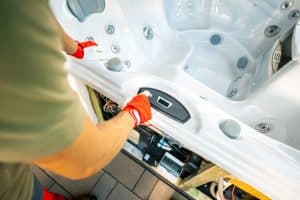
Hot tubs are built for relaxation —

If you’re new to spa ownership or
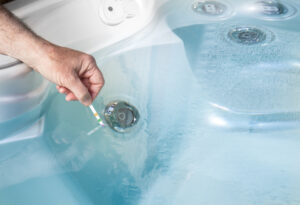
Knowing how to keep hot tub water clean is essential for safe, enjoyable ownership. Clear, fresh-looking water makes a hot tub more inviting, but appearance
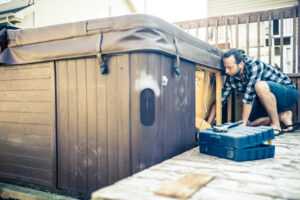
Hot tub maintenance costs are an important consideration for anyone planning to buy a spa or already enjoying one at home. Although day-to-day maintenance is
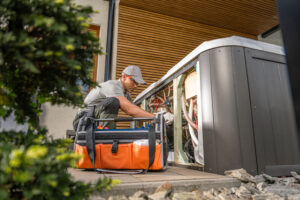
A hot tub needs professional repair when a problem goes beyond routine water care, filter cleaning or a simple check recommended in the manufacturer’s manual.