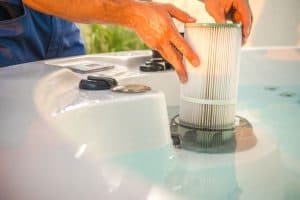
Filters for a Hot Tub: Maintenance Tips for Clean, Clear Water
When it comes to keeping your spa

Hot tub maintenance costs are an important consideration for anyone planning to buy a spa or already enjoying one at home. Although day-to-day maintenance is generally manageable, the expense involves more than occasionally buying chlorine or cleaning the filters.
For a typical domestic hot tub in the UK, setting aside approximately £25 to £50 per month for routine maintenance and servicing is a reasonable starting point. This provides an illustrative annual budget of £300 to £600, although actual costs depend on the model, how frequently it is used and whether professional servicing is included.
This allowance excludes electricity, significant repairs and major replacement parts.
Some owners will spend less, particularly if they carry out most maintenance themselves. Others may need a larger budget because of heavy use, more expensive replacement filters or additional professional servicing.
The most useful approach is to divide maintenance into predictable costs, occasional expenses and unexpected repairs. This makes it easier to understand what ownership involves and prevents small expenses becoming unwelcome surprises.
Hot tub maintenance involves several different activities, and not all of them happen at the same frequency.
Some tasks, such as checking the water chemistry, may be required several times a week or more frequently depending on usage. Others, including filter replacement and professional servicing, occur much less often.
A practical budget should account for the following:
| Maintenance expense | Illustrative budget |
|---|---|
| Water treatment chemicals and testing supplies | £15 to £35 per month |
| Replacement filter cartridges | £30 to £100 per year |
| Water replacement | Depends on capacity, local water charges and refill frequency |
| Professional servicing | Approximately £100 to £200 per visit |
| Unexpected repairs | Separate contingency fund |
These figures are broad UK planning estimates rather than fixed prices or Total Hot Tubs quotations. Different hot tubs, water treatment systems and maintenance routines can produce substantially different costs.
An important distinction is that maintenance costs are not identical to running costs.
Electricity, for example, is a significant ownership expense, but it is more useful to account for it separately when calculating the cost of maintaining the equipment.
Keeping the two categories separate also makes it easier to identify opportunities to save money.
Water treatment chemicals are one of the most predictable maintenance expenses.
Unlike occasional repairs or professional servicing, water treatment is an ongoing responsibility whenever the hot tub is in use.
The exact products required depend on the sanitising system, water conditions and manufacturer’s recommendations.
Hot tub water needs effective sanitisation to control potentially harmful microorganisms.
Chlorine and bromine are commonly used in domestic spas, although the appropriate treatment depends on the equipment and manufacturer’s instructions.
The amount required will vary according to how often the hot tub is used, how many bathers enter the water and the condition of the water itself.
A couple using their hot tub occasionally may consume fewer chemicals than a family regularly inviting several guests.
However, sanitiser use should always be guided by testing and the product instructions rather than attempts to reduce expenditure.
Water chemistry also needs to remain within the appropriate operating range.
Products that increase or decrease pH may be required depending on the source water and how its chemistry changes during use.
Poorly balanced water can make sanitisation less effective and may contribute to scale, corrosion or damage to components.
The financial benefit of maintaining correct water balance therefore extends beyond the immediate cost of chemicals.
Test strips or suitable water testing equipment are another recurring expense.
They allow owners to check whether sanitiser and water balance are within the required ranges.
The cost will depend on the type of testing system and how frequently replacement supplies are needed.
Some hot tubs may require filter-cleaning solutions, pipework cleaners or other products recommended by the manufacturer.
These should be included in the budget rather than treated as unexpected purchases.
Importantly, buying more chemicals is not necessarily better maintenance.
Using unnecessary treatments or incorrect doses can create water balance problems and waste money.
Hot tub filters are designed to capture debris and particles as water passes through the filtration system.
Regular cleaning helps them operate effectively, but filter cartridges will eventually need replacing.
A useful planning allowance for replacement cartridges is approximately £30 to £100 annually, although the actual cost can be higher for particular models or filtration systems.
There are two separate considerations.
Routine filter cleaning generally involves relatively little expense beyond water, suitable cleaning products and the owner’s time.
However, it is important to follow the manufacturer’s cleaning instructions.
A filter that is not properly maintained may restrict water flow and make the circulation system work harder.
Filter cartridges cannot be cleaned indefinitely.
They may eventually become damaged, lose their shape or retain contamination that cleaning cannot adequately remove.
The appropriate replacement interval depends on the cartridge type, usage and manufacturer’s guidance.
For budgeting purposes, it is worth checking the price and quantity of replacement filters for the exact hot tub model before purchasing.
Two similarly sized hot tubs may have different filtration systems and therefore different replacement costs.
This is one reason why maintenance expenses should be considered alongside the original purchase price.
Professional servicing is another expense worth planning for, even when routine water care is handled at home.
A typical professional hot tub service may include inspecting circulation equipment, checking components, examining seals and connections, assessing general condition and carrying out cleaning or maintenance appropriate to the service package.
The exact work will depend on the provider and the condition of the spa.
For general budgeting, approximately £100 to £200 per visit is a useful indicative range, but this should not be interpreted as a fixed quotation.
Some owners choose periodic servicing as a preventative measure, while others arrange professional attention when a specific issue develops.
A hot tub contains components that operate in a demanding environment involving water, heat and repeated use.
Pumps, heaters, seals and electrical systems can develop problems over time.
A professional inspection may identify signs of wear, leaks or unusual operation before a fault becomes more serious.
This does not guarantee that breakdowns will be prevented, but it can reduce the likelihood of some problems going unnoticed.
Many routine tasks are suitable for owners who follow the manufacturer’s guidance.
These generally include testing and treating water, cleaning accessible filters, wiping surfaces and checking the condition of the cover.
However, electrical faults, pump problems, persistent leaks and internal component repairs should be assessed by suitably qualified professionals.
Homeowners should not attempt electrical repairs themselves.
Total Hot Tubs provides maintenance support, which is a relevant option for owners who need professional assistance with their spa.
Routine maintenance is fairly predictable. Repairs are not.
A hot tub may operate reliably for years with little attention beyond normal maintenance, but individual components can still fail.
Potential repair expenses include:
The cost of dealing with these problems varies considerably.
A straightforward replacement part may be relatively inexpensive, while a major equipment fault can involve significant labour and component costs.
It would therefore be misleading to suggest that every owner should expect the same annual repair bill.
Instead, it is sensible to maintain a separate repair contingency.
One possible approach is to set aside an additional £10 to £20 per month for future repairs and replacement parts.
This would create a reserve of £120 to £240 over a year.
It is not a prediction of actual annual repairs, and it may be insufficient for a major component failure. Its purpose is to gradually build a fund that can help with unexpected expenditure.
Unused money can remain available for future years.
For an older hot tub with an uncertain maintenance history, a larger reserve may be appropriate.
One of the biggest differences between households is how frequently the hot tub is used.
Consider two illustrative situations.
A couple uses their hot tub once or twice a week.
They maintain the water correctly, rinse the filters as required and replace the water according to testing, usage and manufacturer guidance.
Their ongoing chemical consumption may be relatively modest.
A family uses its hot tub most evenings and frequently invites friends over.
More bathers introduce additional contaminants, including perspiration, body oils and residues from personal care products.
This can increase sanitiser demand and place additional demands on filtration.
Water may also require more frequent replacement.
Although both households could own the same hot tub model, their maintenance expenditure may differ considerably.
This is why a monthly budget should reflect realistic use rather than relying entirely on a generic figure.
The size of the spa can influence expenditure, but the relationship is not always straightforward.
Larger models generally contain more water and may require greater quantities of treatment products when filling or adjusting the water.
They may also use larger or multiple filter cartridges.
However, a small hot tub used heavily can still require substantial attention.
For example, a compact spa with several regular bathers may experience greater demands on water treatment than a larger model used occasionally by two people.
When comparing hot tubs, therefore, it is worth considering both water capacity and expected usage.
A smaller model is not automatically the cheapest to maintain in every circumstance.
Reducing maintenance expenditure should focus on preventing unnecessary work and avoiding problems rather than cutting back on essential water treatment.
Several practical habits can help.
Showering removes some of the perspiration, cosmetics and other contaminants that would otherwise enter the spa water.
This can reduce the load placed on the sanitising and filtration systems.
A properly fitted cover helps keep leaves, insects and other debris out of the water.
It also reduces heat loss, which can lower electricity consumption even though energy is a separate running expense.
Regular testing allows developing water balance issues to be addressed before they become more difficult to correct.
Ignoring testing may eventually result in more expensive corrective treatment or the need to replace the water prematurely.
Cleaning filters according to the manufacturer’s instructions helps prevent unnecessary restrictions in water circulation.
Use treatments appropriate to the water conditions and the manufacturer’s recommendations.
Adding multiple products without understanding their purpose can increase costs and create further water quality problems.
An unusual noise, persistent leak or repeated fault code should not be ignored.
Continuing to operate faulty equipment can sometimes increase the extent of a problem.
Prompt professional diagnosis may prevent additional damage.
Rather than relying on one national average, homeowners can build a simple budget based on their equipment and maintenance preferences.
Consider the following illustrative example.
A homeowner estimates:
| Expense | Annual allowance |
|---|---|
| Chemicals and testing products | £240 |
| Filter replacements | £60 |
| Professional service | £150 |
| Water replacement allowance | £30 |
| Total planned maintenance | £480 |
This is equivalent to £40 per month.
If the homeowner also sets aside £15 per month for unexpected repairs, the total monthly maintenance and contingency allowance becomes £55.
The figures are examples of how to organise a budget, not prices quoted by Total Hot Tubs or guaranteed ownership costs.
Electricity remains separate.
The advantage of this approach is that the homeowner knows which expenses are expected and which represent a financial reserve.
It also makes the budget easy to adjust once actual spending becomes clearer.
A maintenance budget does not need constant adjustment, but it is worth reviewing periodically.
The first review could take place after several months of ownership, once actual chemical consumption, water replacement frequency and testing supplies are better understood.
Another review may be useful after the first year.
At that point, owners can compare their estimates with real expenditure.
If a household begins using the spa more frequently, its budget may need increasing.
Similarly, an older hot tub may justify a greater repair allowance than a newer model with relevant warranty protection.
The purpose is not to track every small purchase indefinitely.
It is to ensure that ongoing ownership costs remain manageable.
Routine maintenance is generally a manageable part of ownership, although costs vary. A monthly allowance of £25 to £50 for maintenance and servicing is a reasonable initial planning figure for many domestic owners, excluding electricity and significant repairs.
Yes. Water treatment is an ongoing requirement whenever the hot tub is in operation. Consumption varies with usage, water conditions and the sanitising system, so the amount spent will not necessarily be identical every month.
Periodic professional servicing can be beneficial, but the appropriate schedule depends on the manufacturer’s requirements, the model and its usage. Owners should follow the servicing and maintenance conditions relevant to their equipment and warranty.
A newer hot tub may have fewer age-related problems, and applicable warranty protection can reduce certain repair expenses. However, routine water treatment, cleaning and filter maintenance are still required regardless of the spa’s age.
It is usually clearer to account for electricity separately. Maintenance covers water treatment, cleaning, filters, servicing and repairs, while electricity is a regular operating cost influenced by insulation, water temperature, usage and energy tariffs.
Hot tub maintenance becomes much easier to manage when expenses are planned rather than treated as occasional surprises.
Chemicals, testing supplies and filters are predictable costs. Professional servicing can be included as a periodic allowance, while a separate reserve provides some financial protection against repairs.
For many homeowners, a starting budget of £25 to £50 per month for routine maintenance and servicing, with an additional allowance for unexpected repairs, provides a sensible framework.
The actual amount should reflect the hot tub’s specifications, usage and maintenance requirements.
Most importantly, good maintenance should be viewed as a way of protecting the hot tub and supporting safe, enjoyable use, not simply another expense to minimise.
Total Hot Tubs supplies hot tubs and provides maintenance and aftercare support to help owners look after their equipment. For guidance on maintenance requirements or professional assistance, contact the team.
Phone: 0800 999 8707
Email: info@totalhottubs.co.uk
Find out more: https://totalhottubs.co.uk/
When it comes to keeping your spa

Thinking about adding a small hot tub
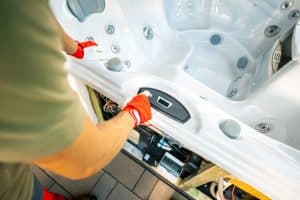
Hot tubs are built for relaxation —

If you’re new to spa ownership or
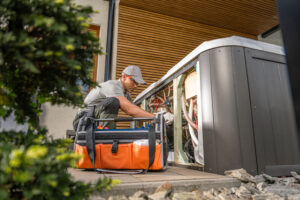
A hot tub needs professional repair when a problem goes beyond routine water care, filter cleaning or a simple check recommended in the manufacturer’s manual.
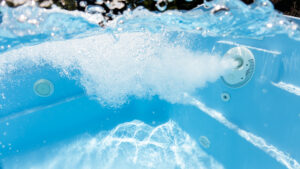
Cloudy hot tub water usually means that fine particles, oils, microorganisms or treatment products are remaining suspended in the water instead of being removed or
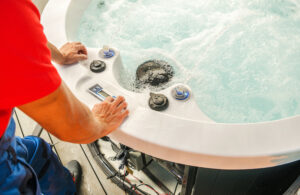
Hot tub maintenance is essential if you want clean water, reliable performance and a spa that stays enjoyable to use. The most common hot tub