Filters for a Hot Tub: Maintenance Tips for Clean, Clear Water
When it comes to keeping your spa

A hot tub needs professional repair when a problem goes beyond routine water care, filter cleaning or a simple check recommended in the manufacturer’s manual. Warning signs can include repeated error codes, weak circulation, unusual pump noises, water that will not heat, unexplained water loss or electrical components that behave unpredictably.
Some minor problems can be caused by a dirty filter, low water level or incorrect control settings. These are often reasonable for an owner to check. However, hot tubs combine water, electricity, pumps, heaters and pressurised plumbing, so dismantling equipment without the right knowledge can be dangerous and may cause further damage.
The most useful approach is to recognise changes in normal operation. Hot tub owners become familiar with how quickly the water heats, how strong the jets feel and which sounds the equipment normally makes. A sudden or persistent change can indicate that a component needs attention.
Prompt repairs may prevent a relatively small fault from developing into a more expensive failure. They can also reduce the risk of water-quality problems, leaks and prolonged periods when the hot tub cannot be used.
Which hot tub problems can owners safely check themselves?
Before arranging a repair, owners can complete a small number of basic checks that do not involve opening electrical compartments or dismantling equipment.
The exact checks should always follow the manufacturer’s guidance for the model.
Check the water level
A low water level can prevent the circulation system from operating correctly. The pump may draw in air, jets can lose strength and error messages may appear.
Top up the water to the recommended level and check whether normal operation returns. Avoid overfilling, as the water level will rise when people enter the tub.
If the level continues to fall, there may be a leak that requires investigation.
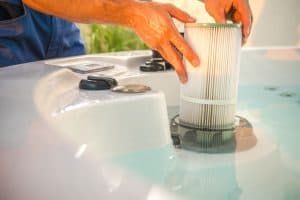
Inspect and clean the filter
A blocked filter can restrict circulation and place additional strain on the pumps and heater.
Remove the filter according to the manufacturer’s instructions and rinse between the pleats. Use a suitable filter cleaner when required.
If the filter is damaged, heavily scaled or permanently blocked, replace it with the correct type.
A useful test may be to run the system briefly without the filter, but only when the manufacturer permits this. If performance improves immediately, the filter is likely to be contributing to the problem.
Review the control settings
A hot tub may appear faulty when it is operating in an economy, sleep or restricted heating mode.
Check the set temperature, filtration cycle and operating mode. Also confirm whether a temporary power cut has reset any programmed settings.
Avoid changing several settings at once. Make one adjustment, allow time for the system to respond and check the result.
Look for an obvious error message
The display may show a code linked to water flow, temperature, sensors or another operating condition.
Consult the manual to understand the basic meaning of the code. Some messages can be cleared by correcting the water level or cleaning the filter.
Repeated codes should not be ignored, particularly when they return after the recommended checks have been completed.
What signs suggest a pump or circulation fault?
The circulation system moves water through the filter, heater and treatment process. When it is not working correctly, the effects can appear throughout the hot tub.
Common warning signs include weak jets, poor filtration, unusual noises, inconsistent heating and water that becomes cloudy repeatedly.
The jets are noticeably weaker
Jet strength can vary according to the control setting and whether air controls are open. However, a sudden reduction across several jets may indicate restricted flow or a pump problem.
Possible causes include:
Owners can check the water level, filter and visible controls. Internal pump faults should be diagnosed by a qualified technician.
The pump hums but does not move water
A humming sound may indicate that the pump is receiving power but cannot start or turn correctly.
This can be linked to a seized component, failed capacitor, blockage or internal motor fault.
Repeatedly switching the pump on and off may cause further damage. Turn the hot tub off according to the manufacturer’s instructions and arrange professional attention.
The pump makes grinding or screeching noises
Hot tub pumps make a consistent operating sound, but grinding, rattling, squealing or screeching is not normal.
These noises may indicate worn bearings, debris within the system or a component beginning to fail.
Continuing to run the pump could turn a repairable issue into a complete pump failure.
Circulation stops intermittently
An intermittent fault can be more difficult to identify than a complete failure. The hot tub may work normally for a period before the flow stops or an error appears.
This may indicate an overheating motor, failing sensor, loose electrical connection or control problem.
Keep a note of when the fault occurs and any code shown on the display. This information can help the technician diagnose the cause.
Why might a hot tub stop heating properly?
A hot tub that does not reach or maintain its selected temperature may have a heater fault, but several other issues can produce similar symptoms.
Before assuming the heater needs replacement, check the water level, filter, operating mode and cover condition.
Restricted flow may stop the heater
Hot tub heaters normally rely on adequate water flow. If the system detects poor circulation, it may prevent heating to protect the equipment.
A blocked filter or failing circulation pump can therefore create what appears to be a heating fault.
This is one reason why replacing a heater without diagnosis may not solve the problem.
The water heats too slowly
Hot tubs do not normally heat a full body of cold water immediately. Heating time depends on the water volume, starting temperature, ambient conditions, heater output and cover quality.
However, a noticeable change from the tub’s usual heating speed may indicate an issue.
Possible causes include:
Record the starting temperature and check it again after a suitable period. This gives the technician more useful information than simply reporting that the water feels cold.
The temperature fluctuates
Water that becomes too hot, too cold or changes unpredictably may indicate a sensor or control fault.
A difference of a small amount can be normal as the system cycles. Larger or unpredictable changes deserve investigation.
Stop using the hot tub if the displayed temperature appears unreliable. Water that is significantly hotter than expected may present a risk to bathers.
The heater trips the power
If the electrical supply trips when the heater operates, the hot tub should be switched off and inspected professionally.
The fault could involve the heater, wiring, moisture, pump or another component. It should not be repeatedly reset in the hope that it will resolve itself.
Any electrical issue involving water requires a cautious approach.
When does a hot tub leak require professional attention?
A falling water level is one of the clearest signs that a hot tub may need repair.
Some water is lost through evaporation, splashing and people leaving the tub. A cover can also collect condensation. However, a noticeable or repeated drop that cannot be explained by use may indicate a leak.
Check for simple sources first
Before assuming there is a plumbing failure, check:
Dry the surrounding area and monitor whether new water appears.
Do not crawl beneath an unsafe structure or remove panels while the power remains on.
Water around the cabinet
Moisture beneath or around the cabinet may come from a loose fitting, damaged seal, cracked pipe or pump component.
The location of visible water does not always identify the source. Water can travel along pipes, insulation and the base before appearing elsewhere.
A technician may need to remove panels, pressure test sections or inspect the system while it is operating.
The water level stops falling at one point
If the water level drops and then stabilises, the final level may help indicate the approximate height of the leak.
For example, a leak near a jet fitting may stop once the water falls below that fitting.
This information is useful, but it is not a reason to dismantle the fitting without the correct tools and parts.
Leaks should not be left
Even a slow leak can create additional problems. Escaping water may damage insulation, timber structures, electrical equipment or the base beneath the tub.
The system may also need frequent topping up, which disrupts water balance and increases heating costs.
Arrange professional hot tub maintenance when unexplained water loss continues.
What do repeated error codes mean?
Error codes are designed to alert the owner to operating conditions or faults. They may refer to low flow, high temperature, sensor disagreement, heating problems or communication between components.
The exact meaning varies between manufacturers and control systems.
A code that clears once may be temporary
A low-flow message following a water change may be linked to trapped air or an incorrectly fitted filter.
If the manual provides a simple corrective process and the fault does not return, professional repair may not be necessary.
Monitor the hot tub closely after restarting.
A code that keeps returning needs investigation
Repeatedly clearing the same code without addressing the cause can allow a fault to worsen.
For example, a flow code may relate to a blocked filter, but it could also indicate a failing pump, damaged sensor or obstruction within the system.
Provide the technician with:
A photograph of the display can help prevent the code from being remembered incorrectly.
Why are electrical faults especially serious?
Hot tubs contain electrical heaters, pumps, controls, lighting and other equipment close to water.
Electrical repairs should only be completed by appropriately qualified professionals. Owners should not open control boxes, test live circuits or bypass protective devices.
The power repeatedly trips
An occasional household power interruption may not be related to the hot tub. Repeated tripping when the tub starts, heats or activates a pump suggests a fault that needs diagnosis.
Possible causes include:
Do not continue resetting the supply. Switch the hot tub off safely and arrange inspection.
Lights or controls behave unpredictably
Flickering lights, unresponsive buttons, blank displays or settings that change unexpectedly can indicate control or electrical problems.
Some issues may be caused by a temporary software fault or power interruption. Follow the manufacturer’s approved reset process once.
If the problem returns, professional repair is advisable.
There is a burning smell
A burning or overheated smell should be treated as urgent.
Turn off the electrical supply when it is safe to do so and do not use the hot tub. Avoid opening the equipment area to search for the source.
Arrange an inspection before restoring operation.
Can poor water quality indicate a mechanical problem?
Yes. Cloudy water, unstable sanitiser readings or repeated contamination can sometimes result from weak circulation or poor filtration rather than incorrect chemical use alone.
Owners may keep adding treatment products without realising that the water is not moving through the filter effectively.
Cloudiness returns after treatment
When the water becomes cloudy again soon after balancing, filter cleaning and a fresh fill, check whether circulation feels normal.
A failing circulation pump or blocked pipe may prevent adequate filtration.
The water should not be used until the cause is understood and normal clarity has been restored.
The filter remains unusually clean
A filter that stays perfectly clean while the water contains visible particles may not be receiving enough flow.
This could indicate that water is bypassing the filter or that the pump is not circulating correctly.
Check that the filter is installed properly and that no parts are missing. If the setup appears correct, seek professional advice.
Sanitiser is difficult to maintain
Rapid sanitiser loss can be caused by heavy use or contamination, but persistent problems may also involve hidden build-up within the plumbing.
A system flush and water change may help. When the issue returns repeatedly, a professional inspection can identify whether circulation or internal contamination is contributing.
When should unusual noises be investigated?
Hot tubs are not silent. Pumps, relays, water movement and heating cycles all produce normal sounds.
The concern is a sound that is new, louder than usual or associated with reduced performance.
Rattling and vibration
Rattling may come from a loose panel, pipe or component. It can also result from debris or a worn pump.
A loose external cabinet panel may be straightforward to secure if the manufacturer permits it. Noise from inside the equipment area should be inspected professionally.
Clicking
An occasional click may be a relay operating normally. Frequent clicking without the pump or heater starting may indicate a failing relay, control board or supply problem.
Note whether the clicking occurs during a particular function.
Gurgling
Gurgling can indicate air in the plumbing, especially after a refill.
Follow the approved priming procedure. If air repeatedly enters the system, there may be a leak on the suction side or another circulation issue.
How quickly should a repair be arranged?
The urgency depends on the symptom.
Stop using the hot tub and arrange prompt professional attention when:
Less urgent issues, such as a weak light or noisy cover lifter, may allow the hot tub to remain operational if the manufacturer confirms it is safe.
However, delaying minor mechanical faults can increase the eventual repair cost.
Protect the tub while waiting for repair
If the hot tub must be switched off during cold weather, seek advice about frost protection.
Simply disconnecting power to a water-filled tub during freezing conditions can allow pipes and equipment to freeze.
Depending on the situation, the technician may recommend maintaining limited operation, draining the system properly or winterising it.
Do not attempt partial draining without guidance, as trapped water may remain in pipework.
Can regular servicing prevent repairs?
Servicing cannot prevent every component from wearing out, but it can identify developing problems before they cause complete failure.
A service may include checks of pumps, heaters, seals, electrical connections, filters, pipework and control operation.
Early attention can reduce damage
A small seal leak may be easier to repair before water damages surrounding components.
A noisy pump may need a replaceable part rather than a complete unit if addressed early.
Regular inspection also allows worn components to be planned for rather than failing unexpectedly.
Maintenance protects performance
Clean filters, balanced water and correct circulation reduce unnecessary strain on the equipment.
Poor water chemistry can damage heaters, seals and metal components. Scale may reduce heating efficiency, while corrosive water can shorten the life of parts.
Routine owner care and professional servicing work together. One does not replace the other.
Should you repair or replace an older hot tub?
Most individual faults can be repaired, but there may come a point when repeated work is no longer economical.
The decision depends on:
A pump or heater replacement may make sense when the rest of the hot tub is sound. Extensive plumbing leaks, structural deterioration and obsolete controls may make replacement more practical.
Ask for a clear diagnosis and repair estimate before deciding. Avoid replacing the entire tub simply because one serviceable component has failed.
Frequently Asked Questions
Why has my hot tub suddenly stopped working?
Check the power supply, control display, water level and filter first. If the supply trips, an error code returns or the pumps do not respond, switch the hot tub off and arrange professional diagnosis.
Can I repair a hot tub pump myself?
Pump repair involves electricity, water and pressurised plumbing. Unless you are appropriately qualified and the manufacturer authorises the work, it should be handled by a professional technician.
Why is my hot tub not heating but the jets work?
Possible causes include restricted circulation, incorrect settings, a sensor fault, heater failure or an electrical problem. Clean the filter and confirm the operating mode, then seek help if heating does not return.
Is a slow hot tub leak urgent?
A slow leak may still damage insulation, equipment or the supporting base. Monitor the water level and arrange an inspection rather than topping the tub up indefinitely.
How long should a hot tub pump last?
Pump life varies according to the component, usage, water chemistry and maintenance. Unusual noise, weak flow or intermittent operation should be investigated regardless of the pump’s age.
How can you tell when professional hot tub repair is needed?
Professional hot tub repair is needed when a fault persists after safe basic checks or involves internal plumbing, electrical equipment, pumps, heaters, sensors or controls.
Owners can reasonably check the water level, clean the filter, review settings and consult the manufacturer’s error-code guidance. They should not dismantle equipment or repeatedly reset a system that is showing signs of a serious fault.
Changes in noise, circulation, heating performance and water level provide valuable early warnings. Taking action when these signs first appear can prevent further damage and reduce downtime.
The most urgent symptoms include electrical tripping, burning smells, overheating, major leaks and pumps that receive power but fail to operate. In these situations, stop using the tub and seek professional assistance.
For help diagnosing leaks, heating faults, circulation problems or repeated error codes, contact Total Hot Tubs for professional repair and aftercare support.
Phone: 0800 999 8707
Email: info@totalhottubs.co.uk
Find out more: https://totalhottubs.co.uk/
When it comes to keeping your spa

Thinking about adding a small hot tub
Hot tubs are built for relaxation —

If you’re new to spa ownership or

The best hot tub size for a UK garden is the smallest model that comfortably accommodates the people who will use it regularly, while leaving

Cloudy hot tub water usually means that fine particles, oils, microorganisms or treatment products are remaining suspended in the water instead of being removed or
The main difference between domestic and commercial hot tubs is not simply their size or appearance. It is the environment in which they are expected