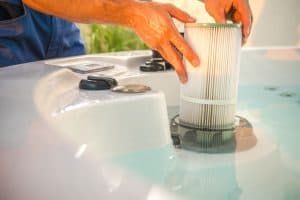
Filters for a Hot Tub: Maintenance Tips for Clean, Clear Water
When it comes to keeping your spa

A swim spa can be a useful setting for low-impact exercise because water supports part of the body’s weight while providing resistance in almost every direction. This can allow users to swim, walk, stretch and perform controlled strength exercises without the repeated impact associated with activities such as running or jumping.
Unlike a conventional hot tub, a swim spa usually contains a longer exercise area and a current that allows the user to swim continuously without travelling from one end of a full-sized pool to the other. Many models can also be used for water walking, resistance exercises and general movement.
That versatility may appeal to people who want to exercise at home, particularly when they prefer water-based activity or find high-impact workouts uncomfortable. Swimming is commonly described by NHS sources as a low-impact form of exercise because it places less stress on the joints than many land-based activities.
However, a swim spa should not be treated as a medical treatment or guaranteed solution for pain, injury or reduced mobility. People with a health condition, recent surgery, balance problem or cardiovascular concern should obtain appropriate professional advice before starting a new exercise programme.
Used sensibly, a swim spa can provide a flexible and convenient environment for building a varied low-impact routine.
Why is water-based exercise considered low impact?
Exercise is generally described as low impact when it avoids forceful or repetitive impact through the feet, knees, hips and spine.
Walking, cycling and swimming are common examples. They still require physical effort, but they do not involve the repeated landing forces associated with running, jumping or many court sports.
Water changes how the body experiences movement in several useful ways.
Buoyancy supports the body
When a person enters the water, buoyancy helps support their body weight. The deeper the water, the greater this support tends to be.
This can reduce the load placed on the lower limbs during movements such as walking, stepping or gentle leg exercises. It may allow some users to move more comfortably than they would on a hard floor.
The effect does not mean exercise becomes effortless. Muscles still need to work to maintain posture, control movement and move against the water.
Water provides natural resistance
Water resists movement in every direction. Moving a leg forwards, pushing an arm backwards or rotating the body all require effort.
The faster a person moves, the more noticeable the resistance usually becomes. This allows exercise intensity to be adjusted without necessarily using heavy weights.
For example, a slow arm movement may feel gentle, while performing the same movement more quickly or with aquatic resistance equipment can make it considerably more demanding.
Research reviews have found that structured aquatic exercise can support aspects of fitness and physical function, although results vary according to the participants, programme and exercise intensity.
Water can slow movement down
Water resistance naturally slows sudden movements and gives users more time to control their position.
This may be helpful during balance, mobility and technique exercises. However, it does not remove the risk of slipping, overexertion or losing balance when entering and leaving the spa.
Safe steps, handrails where appropriate and a clear surrounding area remain important.
How does a swim spa differ from a swimming pool?
A swim spa is usually much smaller than a conventional swimming pool but larger and longer than an ordinary hot tub.
Its defining feature is normally a powered current that creates a continuous flow of water. The user swims against this flow while remaining in broadly the same position.
This makes continuous swimming possible in a relatively compact space.
You do not need to turn repeatedly
In a short conventional pool, swimmers may need to reach the end and turn after only a few strokes.
A swim current removes this interruption. The swimmer can maintain a continuous rhythm, adjusting their effort to match the speed of the current.
This may be useful for steady aerobic sessions, technique practice and controlled intervals.
Exercise can extend beyond swimming
Not every user wants to swim front crawl for an extended period. A swim spa may also support:
The available exercises depend on the depth, internal layout and features of the particular model.
A spa with a large unobstructed floor area may be more practical for walking and standing exercises than one containing several fixed seats.
Some swim spas include a separate hot tub section
Certain models combine a swimming or exercise area with a separate seated hydrotherapy section.
This can allow one water temperature to be used for exercise and another for relaxation, depending on the system design. This is useful because a comfortable hot tub temperature may feel too warm for sustained physical activity.
Other swim spas use one shared body of water, so owners need to select a temperature that suits the planned activity and other users.
You can explore available configurations within the swim spa range.
What exercises can you do in a swim spa?
A useful swim spa routine does not need to involve only one activity. Combining cardiovascular movement, strength work, mobility and recovery can create a more balanced programme.
The right exercises will depend on the user’s ability, goals and any professional guidance they have received.
Swimming against the current
Resistance swimming is one of the most obvious swim spa exercises.
The current speed can usually be adjusted so that the swimmer remains in a stable position. Beginners may start with a gentle flow while more experienced swimmers may choose a stronger current.
Swimming can involve a wide range of muscles and provide aerobic activity without repeated impact through the lower body.
The UK Chief Medical Officers’ physical activity guidance encourages adults to build regular aerobic and strengthening activity into their week. It recommends that adults aim for at least 150 minutes of moderate-intensity activity each week, while also stressing that some activity is better than none.
A swim spa may help an owner work towards general activity targets, although the intensity and duration of each session will vary.
Start with technique before speed
A stronger current is not always better. If it causes the swimmer to lose position, shorten their stroke or lift their head awkwardly, it may be too fast.
Begin with a manageable flow and concentrate on maintaining relaxed, controlled technique.
Some swimmers use a tether for additional positioning support. Any accessory should be compatible with the swim spa and used according to the manufacturer’s instructions.
Water walking
Water walking is a straightforward option for people who do not want to swim continuously.
The user walks forwards through the water, placing each foot down carefully and maintaining an upright posture. Depending on the available space, they may walk against the current or complete controlled steps in one area.
Water walking can be adjusted by changing:
Walking sideways can engage the body differently, but it should be attempted carefully because the spa floor, seats and steps may restrict movement.
Avoid rushing the movement
The objective should be controlled exercise rather than moving as quickly as possible.
Users should keep their feet clear of fittings and avoid stepping backwards unless they have suitable space, balance and supervision.
A swim spa is not a flat, empty rehabilitation pool. Its internal shape must be considered before choosing exercises.
Lower-body resistance exercises
Water can be used to add resistance to several lower-body movements.
Examples may include:
A handrail, spa edge or approved exercise bar may help with stability. Users should avoid pulling on components that were not designed as supports.
Each movement should be slow and controlled. Large, forceful ranges are not automatically more effective and may be unsuitable for someone with reduced mobility or an existing injury.
Upper-body exercises
Pushing and pulling the arms through water can create resistance without conventional gym weights.
Users may perform chest presses, arm sweeps, rowing movements or controlled shoulder exercises. Aquatic dumbbells and paddles can increase resistance, but they should be introduced gradually.
Even lightweight aquatic equipment can feel demanding when moved quickly through the water.
Shoulder movements deserve particular care. People with pain, weakness or a previous injury should seek guidance rather than improvising a demanding routine.
Core and balance exercises
Maintaining an upright position against moving water requires the core muscles to respond continuously.
Users may practise controlled standing, single-leg balance with support or gentle torso movements. The current can add a further stability challenge.
Balance exercises should be performed near a secure support and away from steps or sharp changes in floor level.
Water may slow a fall, but it does not remove the possibility of injury or inhaling water.
Stretching and mobility work
Warm water can feel comfortable for gentle mobility work, particularly at the end of a session.
Users may perform controlled stretches for the calves, thighs, hips, chest and shoulders, provided the spa layout allows a safe position.
Avoid forcing a joint into a deeper range simply because the body feels warmer. Stretching should remain comfortable and controlled.
Where exercises have been prescribed by a physiotherapist or another qualified professional, follow the exact technique and limits provided.
Can a swim spa support cardiovascular fitness?
Swimming continuously against a current can raise the heart rate and support cardiovascular exercise.
The level of effort depends on stroke, current speed, swimming technique and duration. Water walking and jogging-style movements can also become aerobic when performed continuously at a suitable intensity.
A review of aquatic exercise research found benefits across several measures of health and physical fitness, while research into swimming and cardiovascular health suggests that regular water-based training can support some cardiovascular risk factors. The evidence is not identical for every outcome or population, so broad promises should be avoided.
Use perceived effort as a guide
For general moderate-intensity exercise, a common practical guide is whether the person is breathing faster but can still speak in short sentences.
Someone who feels dizzy, unusually breathless, faint, nauseous or experiences chest pain should stop immediately and seek appropriate help.
Heart rate can behave differently during water exercise compared with similar activity on land. People following a medically prescribed heart-rate range should ask their clinician how to apply it in the water.
Build up session length gradually
A beginner does not need to swim continuously for 30 minutes during their first session.
A routine might start with several short intervals, separated by gentle water walking or rest. Duration and current speed can then be increased gradually as technique and confidence improve.
Progress should be based on controlled movement rather than exhaustion.
Can a swim spa help with strength training?
Water resistance can support strength and muscular endurance exercises, particularly when movements are structured and progressed over time.
Research reviews suggest that properly planned aquatic exercise can improve muscle strength and physical function in some groups. Results depend on the exercise design, intensity and consistency of training.
A swim spa is not necessarily a full replacement for land-based resistance training. Exercises such as lifting, carrying and weight-bearing movement offer benefits that may not be reproduced fully in water.
For general fitness, many people may benefit from combining swim spa activity with appropriate walking, resistance training and everyday movement.
Resistance should be progressive
Muscles adapt when they are challenged over time.
Aquatic exercise can be progressed by:
Only one or two variables should be changed at a time. This makes it easier to judge how the body responds.
Good technique still matters
Water can hide poor technique because movements are less visible and feel softer.
Users may twist, lean or compensate without noticing. Exercising near a reflective surface, working with a qualified instructor or asking a professional to review technique can help.
Pain should not be treated as proof that an exercise is working.
Is swim spa exercise suitable for people with joint concerns?
Low-impact water exercise may appeal to people who find high-impact activity uncomfortable.
NHS sources commonly recommend swimming as a low-impact option in situations where reducing stress on joints is helpful.
Research has also investigated aquatic exercise for people with osteoarthritis and other musculoskeletal conditions. One randomised study involving middle-aged and older adults with osteoarthritis found improvements in function and pain following supervised swimming or cycling programmes.
However, these findings do not mean that unsupervised swim spa use is suitable for every person with joint pain.
The cause of pain matters
Joint discomfort may result from many different conditions, injuries or movement problems.
An exercise that suits one person may aggravate another. Water temperature, depth, movement range and current strength can all affect how the body responds.
Anyone with persistent or unexplained pain should seek appropriate clinical advice before starting a new programme.
Entry and exit may be the hardest part
A person may move comfortably once supported by water but struggle with steps, climbing over the spa edge or walking on a wet surface.
This practical issue should form part of the buying decision. Consider:
A model that offers excellent in-water exercise may still be unsuitable if the intended user cannot enter and leave it safely.
What water temperature is best for exercise?
There is no single temperature that suits every form of swim spa exercise.
A temperature that feels pleasant while sitting still may feel excessively warm during sustained swimming. As the body produces heat through exercise, overheating and dehydration can become concerns.
Many users therefore keep an exercise-focused swim spa cooler than a conventional hot tub.
The suitable temperature depends on exercise intensity, session length, individual health and the manufacturer’s operating guidance.
Avoid intense exercise in very hot water
Hot water places additional demands on the body’s temperature-control system.
Users should keep drinking water nearby, take breaks and leave the spa if they feel light-headed, unwell or excessively hot.
Alcohol should not be combined with swim spa exercise. It may affect judgement, balance and awareness of overheating.
Separate zones offer flexibility
A dual-zone swim spa can allow a cooler exercise area and a warmer seated relaxation area.
This arrangement may suit households where one person wants to swim while another prefers hydrotherapy seating. It can also allow users to cool down after exercising before moving into a warmer section for a limited period.
The trade-off is that dual-zone models may require more space, more complex equipment and a larger budget.
How often should you use a swim spa for exercise?
Consistency is usually more useful than occasional very demanding sessions.
The appropriate frequency depends on the intensity of the exercise and the person’s wider activity routine. Beginners might start with two or three short sessions each week and increase gradually.
More experienced users may alternate swimming, strength work and mobility sessions.
A simple weekly pattern could include:
Rest and recovery still matter. Water-based exercise can feel easier during the session while producing noticeable muscle fatigue afterwards.
Users should also avoid relying on the swim spa as their only source of movement. Walking, everyday activity and appropriate land-based strength work can provide variety and additional benefits.
What should you look for in an exercise-focused swim spa?
Not every swim spa provides the same swimming experience. Buyers should assess the exercise space and current system rather than concentrating only on seats, lighting or appearance.
A smooth, adjustable current
The current should be strong enough for the intended swimmer but also adjustable for beginners and less demanding sessions.
An uneven or turbulent flow may push the swimmer sideways and make it difficult to maintain technique.
Ask to wet test the model where possible. Current quality is difficult to judge from specification sheets alone.
Sufficient swimming space
Check the length, width and water depth of the exercise area.
Taller swimmers may require more room to extend fully. The internal design should also avoid fittings that interfere with kicking or water walking.
If several household members will use the spa, each person should assess whether the space feels suitable.
A practical floor and entry system
For walking and standing exercises, the floor needs enough clear, level area.
Seats, footwells and changes in depth can reduce usable exercise space. Steps and handrails should allow safe entry and exit.
Buyers planning to use the spa for mobility work should prioritise access features rather than treating them as optional extras.
Exercise accessories
Depending on the model, useful accessories may include:
Confirm that accessories are designed for the model and that their fixing points can withstand the intended movement.
Efficient insulation and maintenance access
A swim spa contains a substantial volume of water. Good insulation and a well-fitting cover can reduce heat loss and support more manageable running costs.
Filters, pumps and other equipment must also remain accessible for servicing. Exercise use may increase the amount of perspiration and organic material entering the water, making consistent filtration and water care important.
Professional swim spa installation can help ensure that the base, access, electrical supply and final position are suitable.
What safety precautions should users take?
A swim spa is a water environment containing powered equipment, steps and moving currents. Exercise should be approached with the same care as activity in a conventional pool.
Users should:
Children should be supervised closely and should not use exercise currents without appropriate adult control.
Water quality must also be maintained. Cloudy or poorly balanced water should be addressed before the spa is used.
Frequently Asked Questions
Do you need to be a strong swimmer to use a swim spa?
Not necessarily. Swim spas can also be used for water walking and standing exercises. Anyone using the swimming current should be confident in the water and understand how to stop or reduce the flow.
Can you lose weight using a swim spa?
Swim spa exercise can contribute to overall physical activity and energy expenditure. Weight change also depends on diet, total activity, health and consistency, so a swim spa cannot guarantee weight loss by itself.
Is a swim spa suitable for rehabilitation?
It may support exercises prescribed by a physiotherapist or other qualified professional. The user should follow professional guidance rather than designing their own rehabilitation programme after an injury or operation.
Can older adults exercise in a swim spa?
Some older adults may find water-based movement comfortable and accessible. Suitability depends on health, balance, mobility and safe entry and exit, so individual professional advice may be appropriate.
Is a swim spa better than a treadmill?
They serve different purposes. A swim spa provides buoyancy and water resistance with less impact, while a treadmill offers weight-bearing walking or running. Some people may benefit from using both as part of a varied routine.
Is a swim spa worthwhile for low-impact exercise?
A swim spa can be a valuable option for people who want convenient access to low-impact exercise at home.
It can support continuous swimming, water walking, resistance movements, mobility work and a range of structured workouts. Buoyancy may reduce the impact experienced during movement, while water resistance can provide a useful challenge for the muscles.
The best results are likely to come from choosing a model that genuinely suits the intended exercises. Current quality, water depth, clear floor space, access and temperature control matter more than decorative features.
Users should also maintain realistic expectations. A swim spa is not a medical treatment, and it does not remove the need for appropriate technique, gradual progression and professional advice when health concerns are present.
When selected carefully and used consistently, it can make regular exercise more accessible, varied and enjoyable throughout the year.
To compare exercise-focused models and discuss space, access and installation requirements, speak to Total Hot Tubs about finding the right swim spa for your home.
Phone: 0800 999 8707
Email: info@totalhottubs.co.uk
Find out more: https://totalhottubs.co.uk/
When it comes to keeping your spa

Thinking about adding a small hot tub
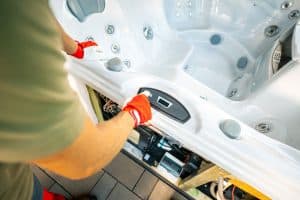
Hot tubs are built for relaxation —

If you’re new to spa ownership or
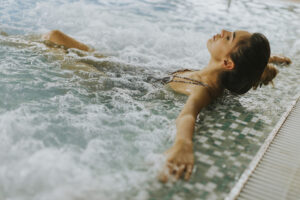
A swim spa can be better than a swimming pool for many UK homeowners, especially if space, year-round use, exercise, heating efficiency and maintenance are
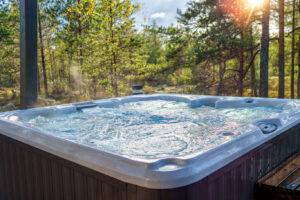
Choosing between a swim spa vs hot tub is a common dilemma for UK homeowners looking to invest in outdoor wellness. While both offer relaxation
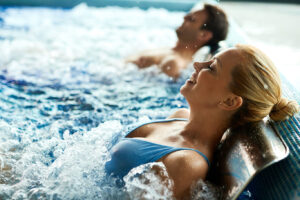
Looking for a way to enjoy both fitness and relaxation at home? A swimspa offers the perfect blend of a compact swimming pool and a