
Filters for a Hot Tub: Maintenance Tips for Clean, Clear Water
When it comes to keeping your spa

The best hot tub size for a UK garden is the smallest model that comfortably accommodates the people who will use it regularly, while leaving enough surrounding space for safe access, maintenance and cover operation.
For a couple with a compact garden, a two or three-person hot tub may provide everything required without dominating the patio. A household that wants more seating flexibility may find a four or five-person model offers the best balance between comfort and footprint. Families or regular entertainers may prefer a six-person or larger hot tub, provided the garden and installation area can support it properly.
The ideal choice cannot be determined by garden dimensions alone. You also need to consider how many people will use the tub, whether you prefer loungers or upright seats, how the hot tub will reach the garden and how much space is needed around it after installation.
A model that technically fits into the available area may still be inconvenient if there is no room to remove the cover, position steps or access equipment panels.
Careful measurement and realistic planning are therefore more important than simply buying the largest hot tub that will fit between two boundaries.
How much space does a hot tub need in a garden?
The required space is always larger than the external dimensions of the hot tub itself.
A hot tub may be listed as approximately two metres wide, but the installation also needs room for people to enter and leave, for a cover or cover lifter to operate and for a technician to reach the equipment.
The final allowance depends on the model and layout, but every plan should include:
Marking the proposed area on the ground is one of the simplest ways to understand the true scale.
Use tape, chalk or garden canes to outline the hot tub. Then add the space required for steps and cover handling.
Walk around the marked area and imagine using it in cold, wet or dark conditions. This often reveals practical problems that are not obvious from a site plan.
Do not measure only the empty patio
A patio may appear spacious when it contains little furniture. Once the hot tub, steps, cover lifter and storage have been added, the area can feel significantly smaller.
Consider which existing items will remain, including:
The hot tub should improve the garden rather than making every other activity inconvenient.
Allow for future servicing
Most hot tubs have equipment panels that provide access to pumps, heaters, controls and plumbing.
These panels should not be permanently blocked by walls, fixed decking or planters. Even when a particular side contains no major equipment, a technician may still need access to inspect pipework or locate a leak.
Recessing a hot tub into decking can create an attractive finish, but removable access sections must be designed from the beginning.
Which hot tub size suits a couple?
For two regular users, a two or three-person hot tub is often the most space-efficient choice.
A compact model uses less garden area and usually contains less water than a large family hot tub. This can make it easier to heat, maintain and incorporate into a modest patio.
However, the advertised number of seats does not tell you how comfortable the hot tub will feel.
Two-person hot tubs
A two-person model may contain:
This can be ideal for couples who value privacy and do not expect guests to join them.
The main consideration is internal space. Some two-person hot tubs provide generous individual seating, while others have a small shared footwell that may feel restrictive.
Both users should check seat depth, legroom and jet position before buying.
A compact footprint is valuable, but it should not come at the expense of long-term comfort.
Three-person hot tubs
A three-person model can be a practical compromise for couples.
The additional seat may provide:
Some three-person models remain compact enough for smaller gardens while offering noticeably more freedom of movement than a strict two-person design.
A couple does not need to fill every seat during each session for the space to be worthwhile.
When should a couple choose a larger model?
A four-person hot tub may be preferable when the owners regularly entertain or expect children, grandchildren or relatives to use it.
It may also suit couples who prefer a larger footwell, several massage positions or a combination of loungers and upright seats.
Buying slightly more capacity can provide flexibility. Buying far more capacity than needed may result in unnecessary use of garden space, water and energy.
You can compare different capacities within the available hot tub range.
Is a four or five-person hot tub the most practical choice?
For many households, a four or five-person hot tub offers a useful balance between space and versatility.
It can accommodate a couple comfortably, provide room for children or guests and still fit within many medium-sized UK gardens.
This does not mean it is automatically the best size for every property. The seating layout remains important.
Four-person hot tubs
A four-person hot tub may work well for:
Some four-person tubs include a lounger and three upright seats. Others use four upright positions to maximise social seating.
A lounger can improve relaxation for one user but occupies more internal space than an upright seat. This can affect how many adults fit comfortably.
Five-person hot tubs
A five-person model may provide a little more flexibility without moving into the footprint of the largest family tubs.
It may be suitable where the household expects three or four people to use the hot tub regularly but wants capacity for an additional guest.
Again, advertised capacity should be treated as a maximum seating guide rather than a guarantee of spacious use.
Five adults may fit into five designated seats, but comfort will depend on:
A wet test or showroom visit can provide a more accurate impression than photographs.
When is a six-person hot tub worthwhile?
A six-person or larger hot tub is most appropriate when the additional seating will be used regularly.
It can suit larger families, social households, holiday properties or homeowners who want the hot tub to become a central entertaining feature.
The model will need more garden space and may contain substantially more water than a compact alternative.
Families may benefit from the extra capacity
A larger hot tub can allow several household members to use the water together.
It may also provide enough seating choice to accommodate different heights and preferences. One user may prefer a deep upright massage seat while another chooses a gentler position.
For families, the additional capacity may remain useful as children grow or relatives visit.
Children must always be supervised, and the manufacturer’s temperature and usage guidance should be followed.
Entertaining requires surrounding space too
A large hot tub should not consume the entire entertaining area.
Guests will need space for:
A six-person tub placed in a garden with no remaining patio space may be less practical than a four or five-person model surrounded by a well-designed seating area.
Large hot tubs can dominate smaller gardens
Before ordering, outline the full model dimensions and view the area from inside the house.
Consider whether the hot tub will block views, reduce natural light or make the garden feel crowded.
The hot tub will also be covered for much of the time. The appearance of the closed cover and cabinet is therefore just as important as the appearance of the water during use.
How does seating layout affect the right size?
Two hot tubs with the same advertised capacity can feel completely different.
A six-seat model with a large footwell and upright positions may feel spacious. A six-seat model containing two full-length loungers may provide a more luxurious experience for fewer people but less shared legroom.
Buyers should think about how the seats will actually be used.
Loungers
A lounger supports the body in a reclined position and may include jets for the back, legs and feet.
It can be very relaxing, but it takes up a significant amount of shell space.
Shorter users may find themselves floating away from the seat, while taller users need enough length to avoid feeling cramped.
A household where everyone wants to sit upright and talk may gain more practical use from a model without loungers.
Upright seats
Upright seats are often more sociable and can allow a greater number of people to fit into the same external dimensions.
Seat depth can vary. A deep seat may suit taller adults, while a shallower cooling seat can be useful for shorter users or anyone who wants less of their upper body immersed.
A varied seating layout can make the hot tub more adaptable.
Footwell size
The footwell is one of the most overlooked parts of a hot tub.
When several adults use the tub, their legs and feet all occupy this shared space. A narrow footwell can make an otherwise generous seating plan feel crowded.
Ask to sit in the hot tub with the expected number of users where possible. A dry test will not reproduce buoyancy perfectly, but it can still reveal whether knees and feet compete for space.
What should you measure before choosing a hot tub?
Accurate planning should cover the installation area and the entire delivery route.
A hot tub cannot be installed successfully if it fits on the patio but cannot pass through the side gate.
Measure the final location
Record:
Check whether gates, sheds or garden rooms will restrict future servicing access.
Measure the delivery route
Hot tubs are often transported upright on their side. Their delivery dimensions may therefore differ from the final installed position.
Measure:
Allow more than the exact cabinet measurement. The delivery team needs room for protective equipment, handling and safe movement.
When direct access is impossible, specialist lifting equipment may be needed.
Consider access from the road
The delivery vehicle needs a practical stopping or unloading position.
Narrow roads, parked vehicles, height restrictions and long distances between the vehicle and garden can affect the delivery plan.
Provide accurate photographs and measurements before the installation date rather than waiting for the hot tub to arrive.
What base does a hot tub need?
Every hot tub needs a level, stable and load-bearing base.
The full weight includes the empty hot tub, water and all occupants. Even a small model can weigh a substantial amount once filled.
An unsuitable base may move, crack or place uneven stress on the shell.
Concrete bases
A professionally prepared concrete base is a common solution because it can provide a strong, level surface.
Its specification should be appropriate for the hot tub and local ground conditions.
The finished surface must be level and large enough to support the complete cabinet, not only the points that appear to carry weight.
Existing paving
An existing patio may be suitable, but it should be assessed carefully.
Loose, uneven or poorly supported paving slabs can move under the load. Minor unevenness that is barely noticeable under furniture may cause problems for a filled hot tub.
Correcting the surface after installation normally requires the tub to be drained and moved.
Decking
A hot tub can sometimes be installed on decking, but ordinary domestic decking should not be assumed to be strong enough.
A structural professional may need to assess the supports, joists and foundations. Reinforcement should be designed for the total filled weight and number of users.
Decking must also provide access for future maintenance and adequate ventilation around the cabinet.
Does the size affect running costs?
Larger hot tubs generally contain more water, so they require more energy for initial heating and may use more treatment products.
However, external size is not the only factor affecting running costs.
Insulation, heater efficiency, cover condition, weather exposure and usage habits all matter.
A well-insulated five-person hot tub may retain heat more effectively than a poorly insulated smaller model.
Water volume is more useful than seat count
Ask for the actual water capacity of each model.
Two tubs advertised for the same number of people may contain different volumes because of variations in shell depth, seating and footwell design.
More water usually means:
It may also provide greater temperature stability during use, particularly when several people enter.
A suitable cover is essential
A well-fitting insulated cover helps reduce heat loss through the water surface.
The cover should be replaced whenever the hot tub is not in use. It should also be inspected for damage, sagging or waterlogging.
A large cover can be heavy and awkward, so a suitable cover lifter may improve everyday use.
The clearance needed for the lifter must be included in the original measurements.
Should you leave room for a pergola or enclosure?
Some owners want to add a pergola, gazebo or privacy structure around the hot tub.
This should be considered before choosing the final size.
A large hot tub that leaves no room for posts, screening or roof overhangs may restrict future garden plans.
Privacy screening
Fencing, planting and screens can reduce overlooking.
The position should protect privacy without blocking equipment access or making the area feel enclosed.
Consider the view from neighbouring upstairs windows, not only ground-level sightlines.
Weather protection
A roof or pergola can provide shelter from rain and make it easier to use the hot tub in changing weather.
The structure should allow adequate ventilation and comply with any applicable planning or building requirements.
It must not trap moisture around the hot tub or prevent the cover from opening fully.
Lighting and pathways
Larger installations often become a dedicated garden zone.
Plan low-level lighting, non-slip pathways and storage for towels or robes. Electrical work near water must be completed by an appropriately qualified professional using equipment suitable for the location.
What size is best for a small UK garden?
In a genuinely compact garden, a two or three-person hot tub is usually the most practical starting point.
These models can provide a full hot tub experience while preserving space for seating, planting and movement.
A four-person model may still work when the garden has a suitable rectangular patio or underused corner.
The deciding factor should be proportion rather than an arbitrary garden measurement.
Avoid filling the entire width
A hot tub placed tightly between boundaries may technically fit but leave no useful access.
Allow space for cleaning, servicing and safe entry. A narrow gap that cannot be walked through does not provide meaningful maintenance access.
Choose the right orientation
Rotating the hot tub can change how well it fits.
Consider which side contains the main equipment panel, where the steps will go and how the cover opens.
The best orientation may not be the one that leaves the control panel facing the house. Servicing and circulation requirements need to take priority.
Consider a three-person layout
Three-person tubs can be particularly useful in small gardens because they may use a compact rectangular footprint.
They can provide more flexibility than a two-person model without the square dimensions of some larger tubs.
The actual measurements and seating layout should always be compared.
What size is best for a medium-sized garden?
A four or five-person hot tub is likely to suit many medium-sized gardens.
It can provide enough seating for a household and occasional guests while leaving space for other outdoor uses.
The hot tub should still be positioned as part of a wider layout.
A balanced medium garden might include:
If the hot tub forces all other functions to be removed, a smaller model may provide better overall value.
What size is best for a large garden?
A large garden can accommodate a six-person or larger hot tub more comfortably, but extra available land does not mean the tub should be positioned far from the house.
A long walk across wet grass can reduce how often the hot tub is used, particularly during winter.
The model should be near enough to the property for convenient access while retaining privacy and an attractive outlook.
Large gardens also create opportunities for:
The installation should still have an appropriate base, electrical supply and drainage arrangement.
Should you buy for current or future needs?
A hot tub is a long-term purchase, so future use deserves some consideration.
A couple may expect children, grandchildren or friends to use the tub in later years. A household may also move from occasional relaxation to more frequent entertaining.
Buying one additional seat can provide valuable flexibility.
However, predicting every possible future scenario may lead to an unnecessarily large model.
Base the decision primarily on:
The best size should feel comfortable during normal use, not only during the largest gathering the owners can imagine.
Can the wrong hot tub size reduce enjoyment?
Yes. A tub that is too small can feel cramped and offer limited seating choice. A tub that is too large may dominate the garden and require more water, energy and maintenance than the owners need.
Common sizing mistakes include:
A showroom visit or wet test can help prevent many of these issues.
Frequently Asked Questions
Is a four-person hot tub big enough for a family?
It may suit a small family, but comfort depends on the ages and sizes of the users and the seating layout. Check the footwell and seat width rather than relying solely on the advertised capacity.
Can you fit a hot tub in a small terraced garden?
It may be possible when there is sufficient space, a suitable base and a workable delivery route. Side access is often the main challenge, so gates, passages and corners should be measured carefully.
How much space should be left around a hot tub?
The required clearance varies by model and cover system. Leave enough space for safe access, equipment-panel removal and cover operation, following the manufacturer’s installation guidance.
Is a two-person hot tub cheaper to run?
It often contains less water and may require less energy for initial heating than a larger model. Insulation, cover quality, temperature settings and frequency of use will also affect running costs.
Should I choose a lounger or more seats?
Choose a lounger when reclining comfort is a priority and the intended users find it supportive. Choose additional upright seats when social use, flexibility and maximum capacity matter more.
What hot tub size should you choose?
The best hot tub size for a UK garden is not necessarily the largest model the space can hold.
A two or three-person hot tub is often well suited to couples and smaller gardens. A four or five-person model provides useful flexibility for many households, while six-person and larger tubs are most worthwhile for families and regular entertainers.
Before choosing, measure the full installation area, allow room for steps and cover handling, and check the complete delivery route. Consider the supporting base, electrical requirements, drainage and future servicing access.
Internal comfort matters just as much as external dimensions. Compare the footwell, seat depth, loungers and jet positions, ideally by sitting in or wet testing the model.
A carefully chosen hot tub should fit naturally into the garden, meet the household’s real needs and remain practical to operate for years. Choosing the right size from the beginning helps protect both the installation and the enjoyment owners receive from it.
For help comparing capacities and planning the available space, contact Total Hot Tubs to discuss your garden dimensions, household requirements and professional hot tub installation.
Phone: 0800 999 8707
Email: info@totalhottubs.co.uk
Find out more: https://totalhottubs.co.uk/
When it comes to keeping your spa

Thinking about adding a small hot tub
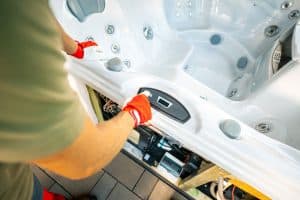
Hot tubs are built for relaxation —

If you’re new to spa ownership or
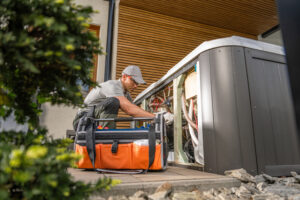
A hot tub needs professional repair when a problem goes beyond routine water care, filter cleaning or a simple check recommended in the manufacturer’s manual.
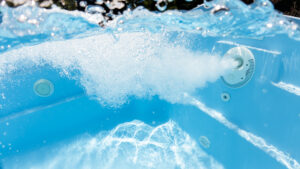
Cloudy hot tub water usually means that fine particles, oils, microorganisms or treatment products are remaining suspended in the water instead of being removed or
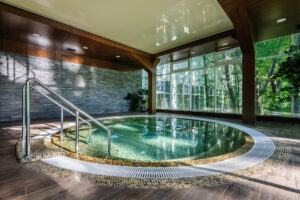
The main difference between domestic and commercial hot tubs is not simply their size or appearance. It is the environment in which they are expected