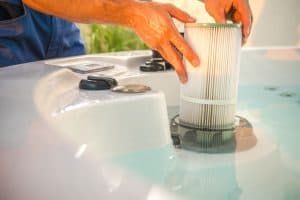
Filters for a Hot Tub: Maintenance Tips for Clean, Clear Water
When it comes to keeping your spa

The main difference between domestic and commercial hot tubs is not simply their size or appearance. It is the environment in which they are expected to operate, the number and type of people using them, and the level of management needed to keep them safe and reliable.
A domestic hot tub is normally designed for private use by members of one household and their invited guests. A commercial hot tub or spa pool may be used by hotel visitors, holiday let guests, gym members or other members of the public. It may experience heavier bathing loads, less predictable user behaviour and more frequent turnover between different groups.
These differences affect the appropriate construction, filtration, water treatment, maintenance schedule and operating procedures.
A hot tub does not necessarily become commercially suitable because it has six seats or powerful pumps. Equally, a product originally described as a domestic hot tub does not remain purely domestic when it is provided as part of a paid-for service. The Health and Safety Executive specifically recognises that domestic-type hot tubs may be used as part of business activities, including holiday accommodation and hotel bedrooms.
Anyone choosing a hot tub for business use should therefore consider both the equipment and the responsibilities created by the way it will be used.
What is a domestic hot tub designed for?
A domestic hot tub is designed primarily for private use at a home. The owners usually know who has used it, how often it has been occupied and whether anything unusual has happened to the water.
Usage may be frequent, but it is generally predictable. A couple might use the hot tub most evenings, while a family may use it several times a week. Friends and relatives may join occasionally, but the number of bathers remains relatively controlled.
This predictability makes it easier for the owner to establish a routine for testing the water, cleaning filters and completing scheduled water changes.
Domestic users normally have consistent habits
Members of the same household tend to develop familiar routines. They may shower before entering, avoid using the tub while wearing heavy cosmetics and understand how the controls work.
They are also likely to notice changes in the water or equipment quickly. An unusual noise, falling water level or cloudy appearance may be identified before it develops into a more serious problem.
Commercial operators cannot rely on this familiarity. Each group of guests may behave differently, and some users may ignore instructions or fail to report problems.
Domestic models prioritise home comfort
Domestic hot tubs are often designed around relaxation, appearance and a choice of massage experiences. Depending on the model, they may include:
The seating configuration may be intended for a couple, family or social group. The best domestic model is therefore the one that matches the household’s available space and expected usage.
Homeowners can compare different seating capacities within the available hot tub range.
Maintenance remains important at home
Domestic use does not remove the need for careful water management. Hot tubs operate with warm, aerated water, and users introduce sweat, body oils, cosmetics and other organic matter.
Owners still need to maintain the correct sanitiser and pH levels, clean filters and replace the water when required. They should also follow the manufacturer’s instructions for circulation, treatment and winter operation.
The difference is that domestic owners are managing the water for themselves and a relatively small, known group. A business is managing it for customers and may have wider legal responsibilities.
What makes a hot tub suitable for commercial use?
Commercial suitability involves more than adding a stronger cabinet or larger number of seats. The complete system must be appropriate for the bathing load, operating environment and management arrangements.
A hotel spa pool used by many guests each day may need a different water-treatment and filtration design from a private hot tub at a holiday cottage. Even within commercial settings, there is no single specification that suits every property.
The operator should begin with a risk assessment and obtain advice from a supplier familiar with the intended type of business use.
Commercial equipment may need to withstand heavier use
Customers may enter and leave throughout the day, creating a much higher bathing load than a typical household. Components such as pumps, heaters, filters, controls, covers and steps may experience greater wear.
The equipment should be capable of operating reliably under those conditions. Accessibility for maintenance and replacement parts is particularly important because prolonged downtime can affect bookings and customer satisfaction.
A commercial operator should consider how quickly technical support can be provided and whether essential parts are readily available.
Water treatment must reflect the bathing load
Each person using a hot tub adds contaminants to a relatively small volume of warm water. When guest numbers increase, sanitiser demand can change rapidly.
Commercial-type spa pool systems may therefore use more advanced circulation, filtration, dosing and monitoring arrangements than ordinary domestic models. The correct solution depends on factors including:
The Pool Water Treatment Advisory Group describes itself as an independent UK organisation dedicated to improving standards in pool and spa water treatment. Its standards and technical guidance are important reference points for professional operators.
Surfaces and layouts should support cleaning
Commercial hot tubs need to be cleaned thoroughly and consistently. Shell shapes, pipework, filters and surrounding surfaces should not create unnecessary areas where contamination or debris can remain.
The installation should also allow staff and engineers to access equipment safely. Enclosing the tub tightly within decking may create an attractive finish but cause serious difficulties when panels need to be removed.
Good commercial design balances the guest experience with the practical needs of cleaning, inspection and repair.
Can a domestic hot tub be used at a holiday let?
A domestic-style hot tub may be provided at a holiday let, but the fact that it looks like a household model does not mean it can be managed in the same way as a privately owned tub.
Once paying guests are using it as part of accommodation, the operator has responsibilities towards people who may be unfamiliar with the equipment. The HSE’s spa-pool guidance specifically covers domestic-type hot tubs used as part of business activities, including holiday park rental units and hotel accommodation.
The operator should ensure that the chosen model, treatment method and operating procedures are suitable for this purpose.
Commercial use is determined by context
A six-person hot tub in a private garden is domestic when it is used by the household. A similar model supplied with a rented lodge or cottage is being used as part of a commercial activity.
This means the distinction is not based entirely on the product label. It is also based on who controls the premises, who uses the water and whether access is connected to a business.
Operators should never assume that a manufacturer’s description of a model as suitable for a family automatically makes it appropriate for repeated guest turnover.
Holiday let guests create unpredictable usage
One group may use the hot tub briefly during the evening. Another may have several people entering and leaving repeatedly throughout the day.
Guests might wear cosmetics, fake tan or lotions. They may bring drinks near the water, fail to replace the cover or change temperature and jet settings without understanding the system.
The operator needs procedures that account for these variations. Instructions for guests are useful, but written rules do not replace inspections, testing and competent management.
Inflatable tubs require particular caution
Some local authority guidance warns that inflatable hot tubs may be unsuitable for holiday let use unless they are drained and cleaned daily. This reflects concerns about whether their filtration and treatment arrangements can cope safely with commercial guest turnover.
Accommodation providers should obtain model-specific professional guidance rather than choosing an inflatable tub purely because it has a lower purchase price or can be installed quickly.
The apparent saving may be outweighed by additional labour, water changes, unreliable operation and the risk that the system is unsuitable for the intended use.
Why does commercial water management require more attention?
Warm water, vigorous circulation and aeration can create conditions in which harmful microorganisms become a concern if the system is poorly designed or managed.
Hot tubs can produce fine water droplets that users inhale. The NHS explains that Legionnaires’ disease can be contracted by breathing in droplets from contaminated sources, including hot tubs and spa pools. Although uncommon, the infection can be serious.
This is why commercial water management must be treated as an essential safety responsibility rather than a cosmetic task.
Clear-looking water is not proof of safety
Water may look clean while still being chemically unbalanced or microbiologically unsafe. Conversely, temporary cloudiness may have several possible causes and should be investigated rather than corrected through guesswork.
Operators need appropriate testing methods and clear acceptable limits. Results should be interpreted by people who understand the system and know what action to take when readings fall outside the required range.
Occasional testing alone is not an adequate management system. Checks, cleaning, maintenance and corrective action must work together.
A risk assessment should shape the controls
The HSE’s guidance is intended to help managers and operators assess and control exposure risks associated with spa-pool systems. It covers design, commissioning, operation and maintenance rather than focusing on one isolated treatment product.
The operator’s arrangements may need to address:
The exact scheme should be based on the installation and competent advice, not copied blindly from another business.
Records provide evidence of control
A private owner may keep informal notes about water changes and servicing. A commercial operator is more likely to need structured records demonstrating that checks and corrective actions have been completed.
Records can help identify repeated problems, such as sanitiser levels falling during busy changeover days or filters requiring more frequent attention than expected.
They also give staff a clear history of the system and support investigations if a guest raises a concern.
HSE guidance for dutyholders covers identifying and assessing risk, preparing and implementing a control scheme, monitoring precautions, keeping records and appointing appropriate responsibility for managing the risks.
How does commercial hot tub maintenance differ?
Domestic and commercial hot tubs require many of the same types of care, but the frequency, documentation and consequences of missed tasks can be very different.
A homeowner may adjust their maintenance routine around known usage. A commercial operator needs a defined procedure that continues through staff absences, busy booking periods and changes in occupancy.
Testing may need to be more frequent
Commercial operators should follow the schedule established by their risk assessment, manufacturer’s guidance and competent professional advice.
Some local authority guidance for accommodation providers calls for daily testing and recording of pH and sanitiser levels. The correct frequency for a particular installation should be confirmed as part of the operating plan.
A single check at the beginning of the week may not reflect conditions after several groups have used the tub.
Cleaning needs to follow a consistent process
The shell, waterline, cover, steps, filters and surrounding area all require attention. Products used for cleaning should be compatible with the hot tub and should not create additional chemical problems in the water.
Staff need clear instructions covering:
Consistency matters because different team members may otherwise apply different standards.
Professional servicing supports routine care
Daily or routine management by staff does not replace specialist servicing. Pumps, heaters, seals, controls and plumbing should be inspected and repaired by people with appropriate knowledge.
Preventative servicing can identify wear before it causes a breakdown during a guest stay. It can also help maintain efficient operation and support the life of the equipment.
Total Hot Tubs provides maintenance support for owners who need professional help caring for their systems.
Are commercial hot tubs always larger than domestic models?
No. A commercial hot tub may be relatively compact, especially when it is dedicated to one hotel room, lodge or holiday cottage.
Likewise, a domestic hot tub can be very large and accommodate seven or more people. Seat count does not determine whether it is commercial.
The more useful questions are:
A large domestic hot tub may have impressive capacity but still be inappropriate for an intensively used leisure facility. A smaller system designed and operated for a controlled commercial setting may be the safer and more practical choice.
How do operating costs compare?
Commercial hot tub costs may be higher because of frequent use, longer operating periods, increased testing, professional servicing and more intensive water treatment.
The business must budget for more than electricity. Potential costs include:
A cheaper product may not be economical if it struggles with the required bathing load or experiences repeated downtime.
Commercial buyers should assess the total cost over the expected service life rather than comparing purchase prices alone.
Downtime has a commercial consequence
When a domestic hot tub develops a problem, the household loses access until it is repaired. When a holiday let hot tub fails, the operator may face disappointed guests, complaints or disruption to advertised facilities.
Prompt access to parts and professional hot tub repairs can therefore have direct business value.
Operators should also have a clear policy explaining what happens when the hot tub must be closed. Water safety should never be compromised simply because guests expect the facility to remain available.
What should a business consider before choosing a hot tub?
The selection process should begin with the operating model rather than a preferred colour, number of jets or promotional photograph.
The supplier needs accurate information about where the hot tub will be installed and how it will be used.
Define the expected bathing load
Estimate the maximum number of users, frequency of changeovers and likely periods of peak demand.
A four-person holiday cottage with weekly bookings presents different demands from a large lodge park, boutique hotel or health club.
Avoid understating the expected usage to obtain a cheaper recommendation. The system needs to be suitable for busy periods, not only the average quiet day.
Confirm the management resources
Consider who will carry out tests, cleaning and inspections. If the property is remote, daily management may be more difficult than it first appears.
The nominated person must have appropriate training and enough time to complete the work properly. Relying on general cleaning staff without clear procedures or instruction is unlikely to provide effective control.
Check installation requirements
The site needs a suitable base, electrical supply, drainage arrangements and access for delivery and future servicing.
Commercial installations should also consider safe guest access, slip hazards, lighting, instructions and emergency arrangements.
Professional hot tub installation can help ensure practical requirements are addressed before the equipment is commissioned.
Discuss standards and responsibilities
Ask the supplier to explain whether the model is appropriate for the exact business context. The discussion should cover filtration, dosing, monitoring, servicing, training and operating documentation.
Where necessary, seek advice from a competent water-treatment specialist, environmental health professional or other qualified adviser.
A product sale should not be treated as the end of the process. Safe commercial operation depends on ongoing management.
Frequently Asked Questions
Is a holiday let hot tub classed as commercial?
It is being used as part of a business activity, even when it is a domestic-style model dedicated to one property. The operator should follow the relevant HSE guidance and obtain competent advice for the specific installation.
Can I install an ordinary family hot tub at a rental property?
Possibly, but suitability must be confirmed for the intended bathing load and management arrangements. A model designed for occasional household use may not cope appropriately with frequent guest turnover.
Do commercial hot tubs need daily testing?
Testing frequency should follow the risk assessment and relevant guidance for the installation. Local authority guidance for holiday accommodation commonly expects frequent, recorded checks, and some guidance specifies daily pH and sanitiser testing.
Who is responsible for a hot tub at a holiday cottage?
The business operator or person in control of the premises has responsibilities for protecting guests. Tasks may be delegated to staff or contractors, but the operator should ensure suitable arrangements are established and followed.
Does professional servicing replace daily water checks?
No. Professional servicing examines equipment and supports ongoing care, but routine water testing, cleaning and operational monitoring must continue between service visits.
Which type of hot tub should you choose?
A domestic hot tub is usually appropriate for a private household where usage is predictable and controlled by the owners. It can prioritise comfort, appearance and the preferred massage experience of a known group of users.
A hot tub used by paying guests requires a different approach. Whether the shell is described as domestic or commercial, the system must be suitable for the bathing load and supported by appropriate risk assessment, water management, maintenance and record keeping.
Commercial buyers should not make their decision based solely on seat numbers, jet counts or purchase price. Reliability, filtration, access for cleaning, technical support and the ability to manage guest turnover are more important.
The safest approach is to explain the intended use fully to an experienced supplier and obtain model-specific advice before installation. This helps ensure the equipment and operating procedures work together from the beginning.
For help comparing hot tubs for a home, holiday property or other setting, contact Total Hot Tubs to discuss the expected usage, available space and installation requirements.
Phone: 0800 999 8707
Email: info@totalhottubs.co.uk
Find out more: https://totalhottubs.co.uk/
When it comes to keeping your spa

Thinking about adding a small hot tub
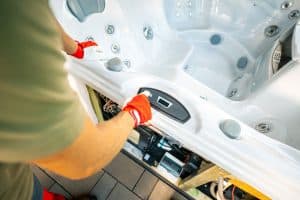
Hot tubs are built for relaxation —

If you’re new to spa ownership or

Large hot tubs can add considerable practical and lifestyle value to a garden when they are positioned carefully and suited to the needs of the

A hot tub can help increase bookings for a holiday let, especially if your property is aimed at couples, families, weekend breaks, luxury stays or

6 person hot tubs are a popular choice for families and those who enjoy entertaining, offering plenty of room for social use while still delivering