
Filters for a Hot Tub: Maintenance Tips for Clean, Clear Water
When it comes to keeping your spa

A small hot tub can be a brilliant choice if you want the comfort and relaxation of a spa without using too much garden space. For many UK homeowners, the main question is not just whether the hot tub itself will fit, but whether there is enough room for delivery, installation, safe access, steps, servicing and everyday use.
As a general guide, you should allow enough space for the hot tub footprint, plus at least 60 cm to 90 cm of clearance on the sides that need access. More space is helpful around the entry side, especially if you want steps, a handrail, privacy screening or somewhere to place towels. The exact amount depends on the model, the garden layout and how the hot tub will be installed.
What size is a small hot tub?
A small hot tub usually means a 2 person hot tub or 3 person hot tub. These compact models are designed for couples, smaller households, tighter patios and gardens where a full-size spa would feel too large.
Typical small hot tubs are often around 1.8 metres to 2.2 metres wide, although dimensions vary by model. Some are square, some are rectangular and some are designed with loungers that change the internal layout without greatly increasing the external footprint.
The important point is that the listed size of the tub is only the starting point. A hot tub that measures 2 metres by 2 metres does not only need a 2 metre by 2 metre space. You also need to think about how people will get in and out, how the cover will open, how engineers can access service panels and whether the surrounding area will feel comfortable rather than cramped.
How much space should you allow overall?
For a small hot tub, it is sensible to plan for an overall area of around 2.5 metres by 2.5 metres as a starting point. This does not mean every installation needs that exact size, but it gives a more realistic allowance than measuring the tub alone.
For example, a compact 2 person hot tub may physically fit into a smaller corner, but you may still need:
If your garden is tight, the layout matters more than the total square metres. A small hot tub can work very well on a patio, decking area or dedicated spa base, provided the access and maintenance requirements are considered from the start.
How much clearance do you need around a small hot tub?
Clearance is one of the most common things people underestimate. The hot tub may fit neatly on paper, but if it is pressed tightly against fences, walls or garden buildings, it can become awkward to use and difficult to maintain.
As a practical guide, leave at least 60 cm around the sides that may need access. If possible, 90 cm or more is better, especially on the side where the main service panel is located. This gives engineers space to work and makes routine checks easier.
You do not always need equal space on every side. In some layouts, a hot tub can sit close to a boundary on one side, as long as the key access points remain reachable. Before deciding, check where the control panel, pumps, filters and service panels are positioned on the specific model you are considering.
What access is needed for delivery?
Delivery access is just as important as the final space. A small hot tub is still a large, heavy item, and it needs a clear route from the delivery point to the installation area.
Before installation, consider:
Many hot tubs are moved on their side during delivery, so the access route needs to accommodate the height and width of the spa in that position. A garden may have plenty of space at the back, but if the only access is through a narrow hallway or tight side gate, installation could become more complicated.
This is why it is worth discussing delivery access early. A professional supplier can help assess whether standard delivery is possible or whether additional planning is needed.
Where should a small hot tub be placed?
The best place for a small hot tub is somewhere practical, level, private and convenient. It should feel inviting to use, not hidden away in a part of the garden that is awkward to reach.
Many people prefer to place a hot tub close to the house, especially in the UK where weather can be unpredictable. A shorter walk from the back door makes the tub easier to use in colder months and reduces the chance of wet feet crossing long areas of decking, paving or lawn.
Think about:
Privacy
A hot tub should feel relaxing. If it is overlooked by neighbours or positioned too close to a public boundary, you may want to allow space for screening, fencing, planting or a pergola.
Views
If your garden has a nice outlook, place the seats so users can enjoy it. This can make a compact hot tub feel much more luxurious.
Shelter
Some shelter from wind can improve comfort and help the area feel more usable throughout the year. However, avoid fully enclosing the space without considering ventilation and access.
Lighting
Soft outdoor lighting can make evening use safer and more enjoyable. Leave space for safe pathways and avoid creating trip hazards around cables or accessories.
What base does a small hot tub need?
A small hot tub must sit on a strong, level and stable base. Even compact models become very heavy once filled with water and people. A soft lawn, uneven paving or weak decking is not suitable unless properly prepared.
Common base options include concrete pads, reinforced patios and suitable structural decking. The right choice depends on the garden, the hot tub model and the load-bearing requirements.
The base should be slightly larger than the hot tub footprint. This helps with stability and gives a cleaner finish around the edges. It also makes it easier to position steps and keep the surrounding area tidy.
If you are planning a new garden layout, it is better to design the base around the hot tub rather than trying to squeeze the hot tub into a finished space later.
Do you need space for steps and a cover lifter?
Yes, and this is often forgotten. Steps are usually needed so users can enter and exit the hot tub safely. Even for a small hot tub, steps can add around 50 cm to 70 cm of usable space on the entry side.
A cover lifter can also need clearance behind or beside the hot tub, depending on the design. Some cover lifters fold the cover down behind the spa, while others move it to the side. Without enough room, the cover may be awkward to handle.
It is worth planning these extras before installation, because they affect how the hot tub feels in everyday use. A compact setup should still be comfortable, safe and easy to manage.
How much room is needed for maintenance?
Routine hot tub maintenance does not need a huge amount of space, but it does need practical access. You will need to reach the filter area, remove the cover, test the water, add chemicals safely and occasionally drain or clean the tub.
The service side of the hot tub is particularly important. If panels cannot be removed easily, repairs and servicing may take longer or become more difficult.
Good maintenance access can also help prevent small issues becoming bigger problems. For example, if you can easily inspect the cabinet, clean around the base and reach key components, it is easier to keep the hot tub in good condition.
For related care advice, a suitable internal link could be: hot tub maintenance.
Can a small hot tub fit on decking?
A small hot tub can sometimes be installed on decking, but only if the decking is structurally suitable. Standard domestic decking may not be strong enough to support the filled weight of a hot tub.
This is not just about the weight of the empty shell. Water is extremely heavy, and once you add bathers, the total load can be substantial. The decking may need reinforcement, additional supports or a separate foundation beneath the spa.
If you want a built-in or partially sunken look, also consider access. Fully surrounding a hot tub with decking can look smart, but there must still be removable panels or access points for maintenance and repair.
For installation guidance, a suitable internal link could be: hot tub installation.
How can you make a small hot tub area feel spacious?
A small garden does not have to feel cramped. With the right layout, a compact hot tub area can feel calm, private and well planned.
Avoid placing too many large items immediately around the tub. Instead, focus on clear access, simple screening and practical storage. A small bench, towel hooks or a nearby storage box can be useful, but too much furniture can make the area harder to move around.
Light-coloured paving, simple planting and low-level lighting can also make the space feel more open. If privacy is needed, vertical screening can be more space-efficient than large shrubs or bulky structures.
The goal is to create a dedicated relaxation area, not just find a gap where the hot tub physically fits.
Common space planning mistakes to avoid
One of the biggest mistakes is measuring only the hot tub and forgetting everything else. This can lead to problems with access, safety and usability.
Another common issue is placing the hot tub too far from the house. While a secluded garden corner may look appealing in summer, it may be less practical on a cold or rainy evening. If the route is awkward, muddy or poorly lit, the hot tub may be used less often.
It is also important not to block service panels. A hot tub needs to be accessible over its lifetime, not just on installation day.
Finally, avoid placing a hot tub on an unsuitable base simply because the space looks convenient. The base is one of the most important parts of a safe, long-lasting installation.
Frequently Asked Questions
Can a small hot tub go in a corner?
Yes, a small hot tub can go in a corner, but you should avoid boxing it in completely. Make sure the service panels, cover and entry side remain accessible.
How close can a hot tub be to a fence?
This depends on the model and layout, but it is sensible to leave enough room for access, cleaning and airflow. Around 60 cm is a useful minimum where access is needed.
Do I need planning permission for a small hot tub?
Most domestic hot tubs do not need planning permission, but restrictions may apply if you live in a listed property, conservation area or have specific property limitations. It is always worth checking if you are unsure.
Is a small hot tub suitable for a patio?
Yes, provided the patio is level, stable and strong enough to support the filled hot tub. Uneven or weak paving should be assessed before installation.
Is a 2 person hot tub big enough?
A 2 person hot tub is ideal for couples or smaller households who want a compact spa for regular relaxation. If you often host guests or have children using it, a 3 or 4 person model may be more practical.
A small hot tub does not need a huge garden, but it does need careful planning. The best results come from allowing space not only for the tub itself, but also for access, steps, cover movement, servicing and safe everyday use. If the layout is planned properly, a compact hot tub can feel comfortable, practical and luxurious rather than squeezed in.
To explore suitable models or discuss your garden layout, speak to Total Hot Tubs for friendly advice.
Phone: 0800 999 8707
Mobile: 07880 358 034
Email: info@totalhottubs.co.uk
Find out more: https://totalhottubs.co.uk/
When it comes to keeping your spa

Thinking about adding a small hot tub
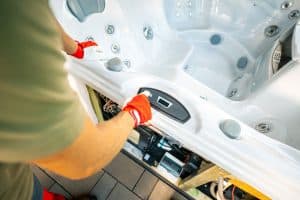
Hot tubs are built for relaxation —

If you’re new to spa ownership or
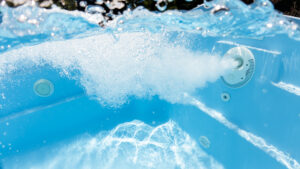
Cloudy hot tub water usually means that fine particles, oils, microorganisms or treatment products are remaining suspended in the water instead of being removed or
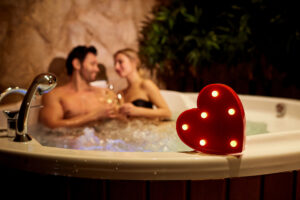
Small hot tubs for couples can be an excellent investment when they suit the available space, budget and way the owners expect to use them.

First-time hot tub buyers should know that choosing the right model is about much more than picking the biggest spa or the one with the